Freedom and Responsibility
At our school there is one ironclad rule: every morning, an uninterrupted block of three full hours belongs entirely to “free work”. Why so long? Because children need time to dive deeply into a topic — without a bell shattering everything after 45 minutes.
But what exactly is “free work”?
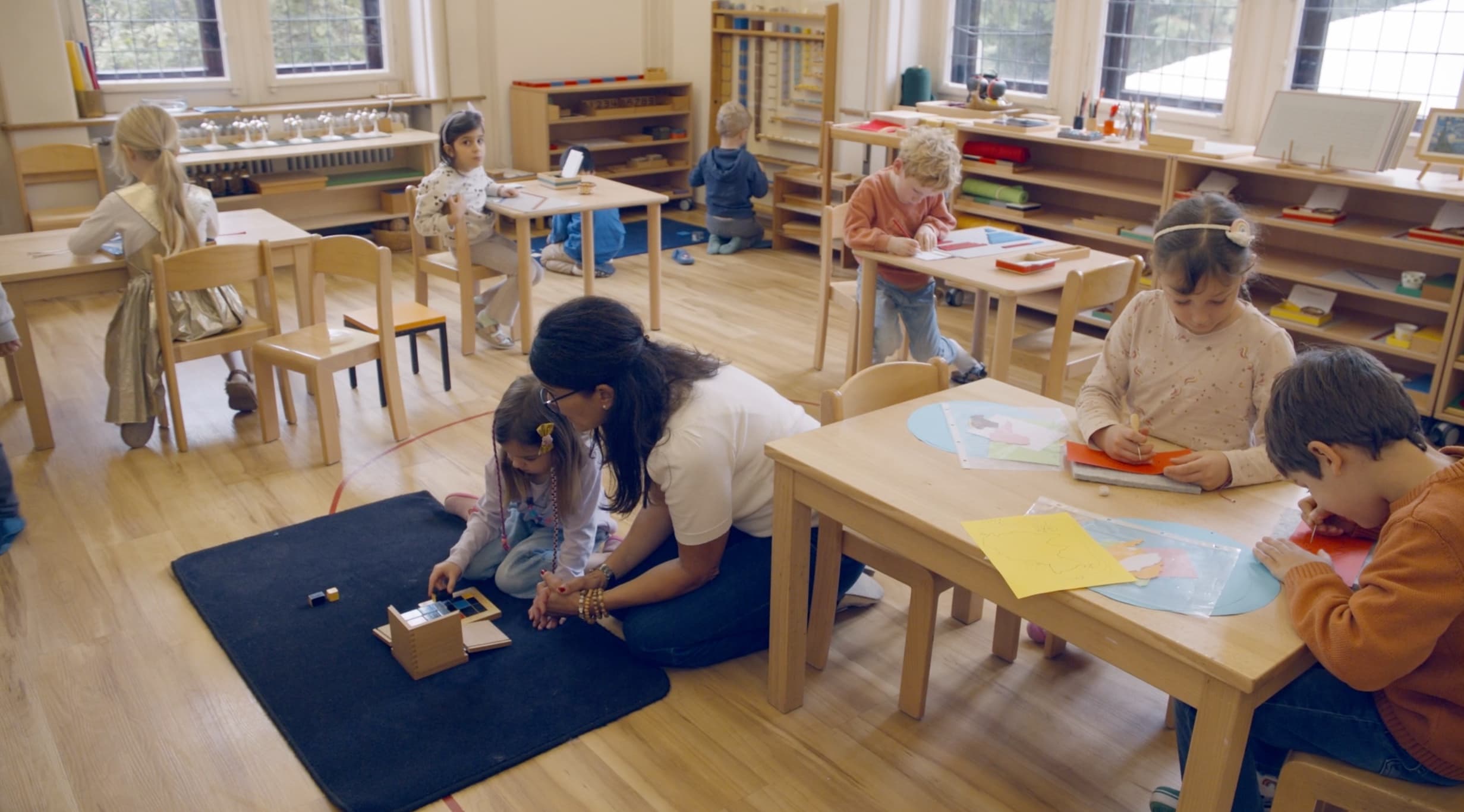
Picture a room that feels more like a living space than a traditional classroom. Shelves filled with Montessori material line the walls. At one table three children work with the Sun–Earth model, a little further away two others practise multiplication tables. On a round carpet six children receive an introduction to area calculation from their teacher. Over there, several children eagerly discuss the evolution of species along the “Timeline of Life”. Everyday life in free work.
Freedom
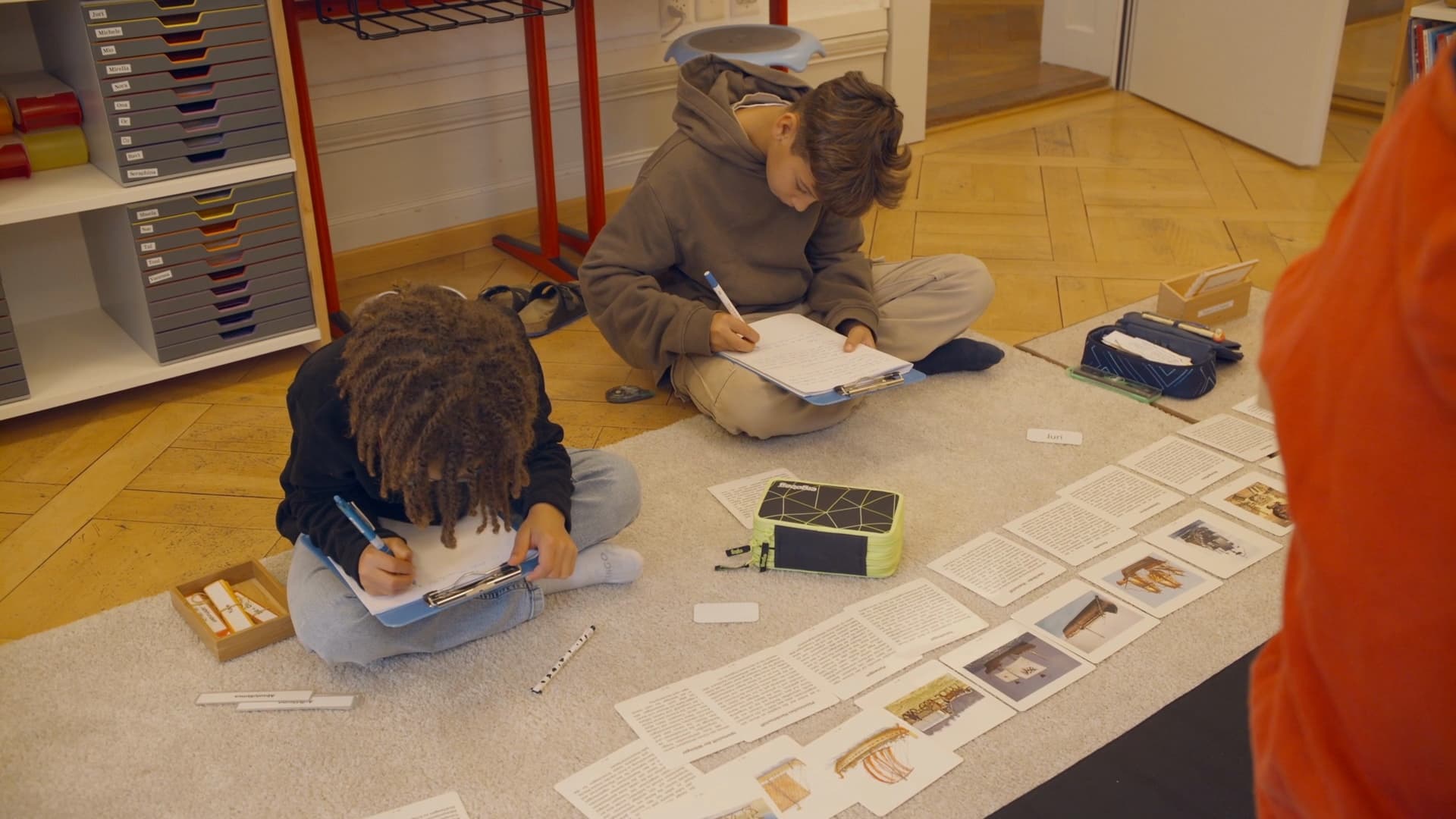
Within these three hours, the children largely shape their working day themselves. They decide:
- What they learn (e.g. fractions first, then a project).
- Where they work (at a table, on a carpet or in the reading corner).
- With whom they work (alone or in a team).
- How long they stay with a topic.
And Responsibility
Anyone who thinks this is a free pass for doing nothing is sorely mistaken. The children enjoy great freedoms, but with them comes a very clear obligation: they must work. It is not about passing the time somehow, but about tackling real tasks on which one can grow. The chosen material must be used seriously. The freedom lies in how the child independently reaches their goal — the goal itself is their own development.
Reflecting on Their Own Work
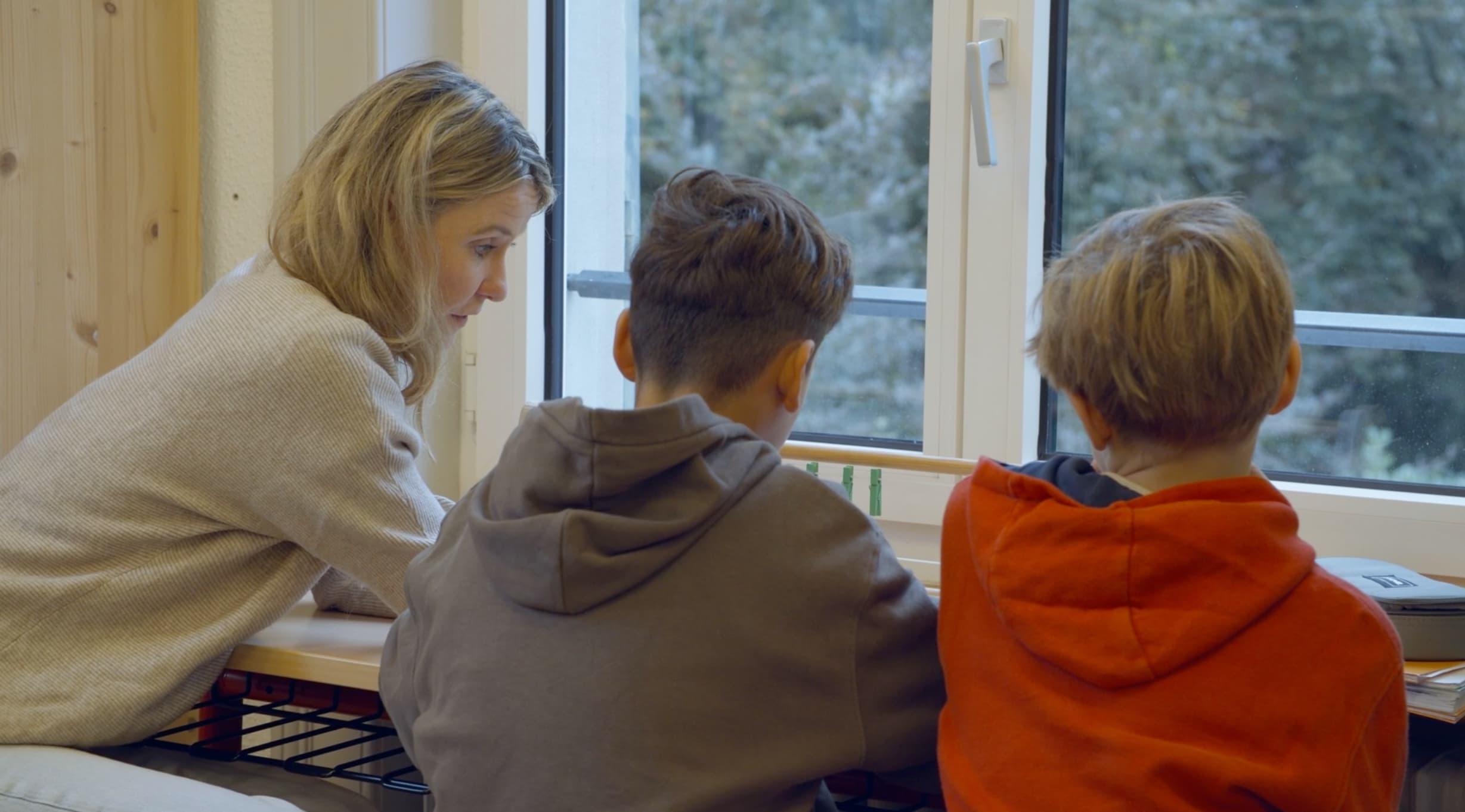
At the end of the working week, every child has a “weekly conference” with the teacher. They discuss the week's work, reflect on the working process, on progress, on the obstacles that stood in the way of success, and on how to avoid them in the future. The basis of this conversation is the child's work journal.
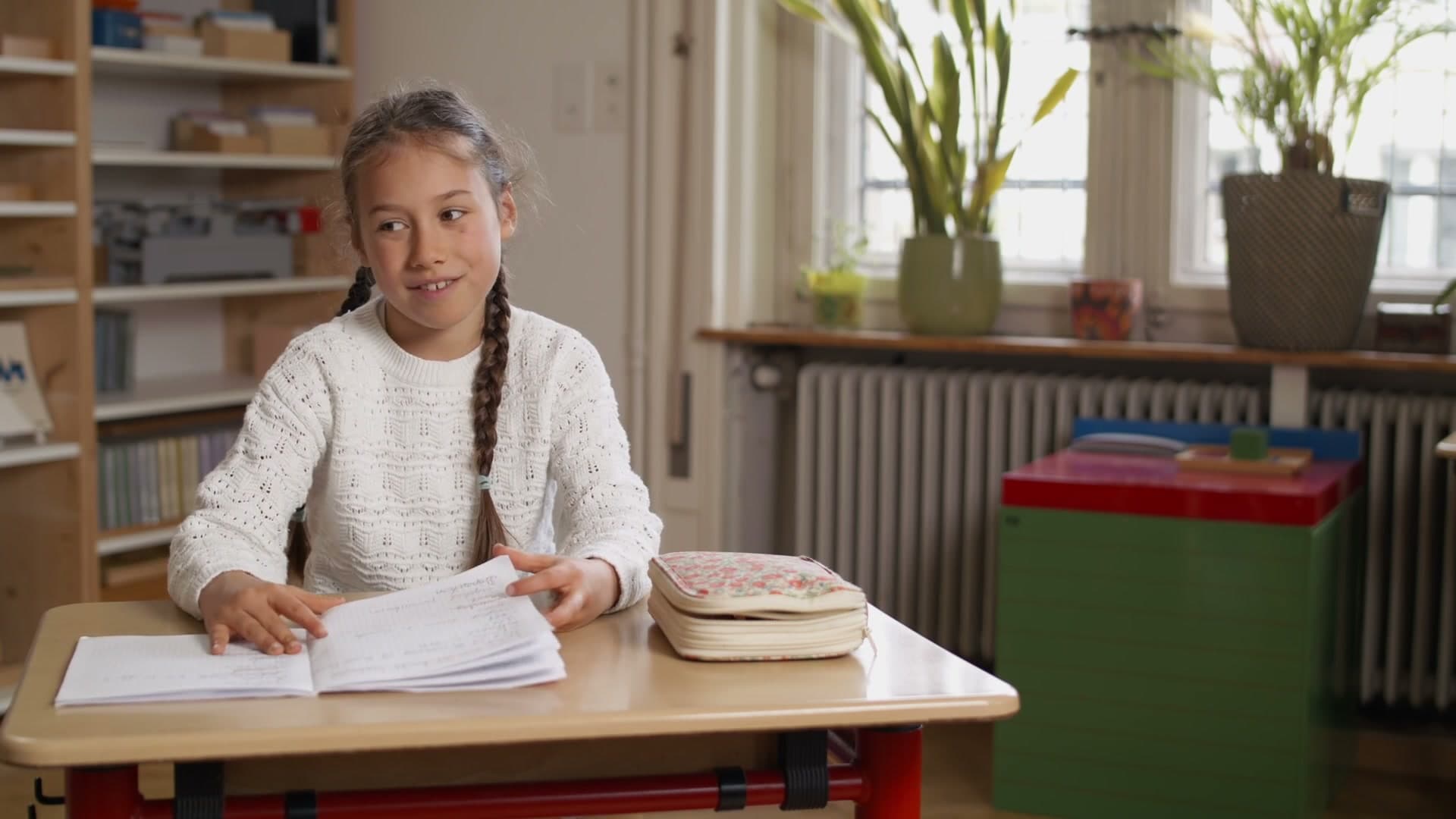
Over the nine years at our school they learn to reflect on themselves, to take responsibility for their work and to organise themselves.
The result? The children learn to take responsibility for themselves. They notice: I am taken seriously here as a person — but I also have to deliver. And for myself, not for the grades.