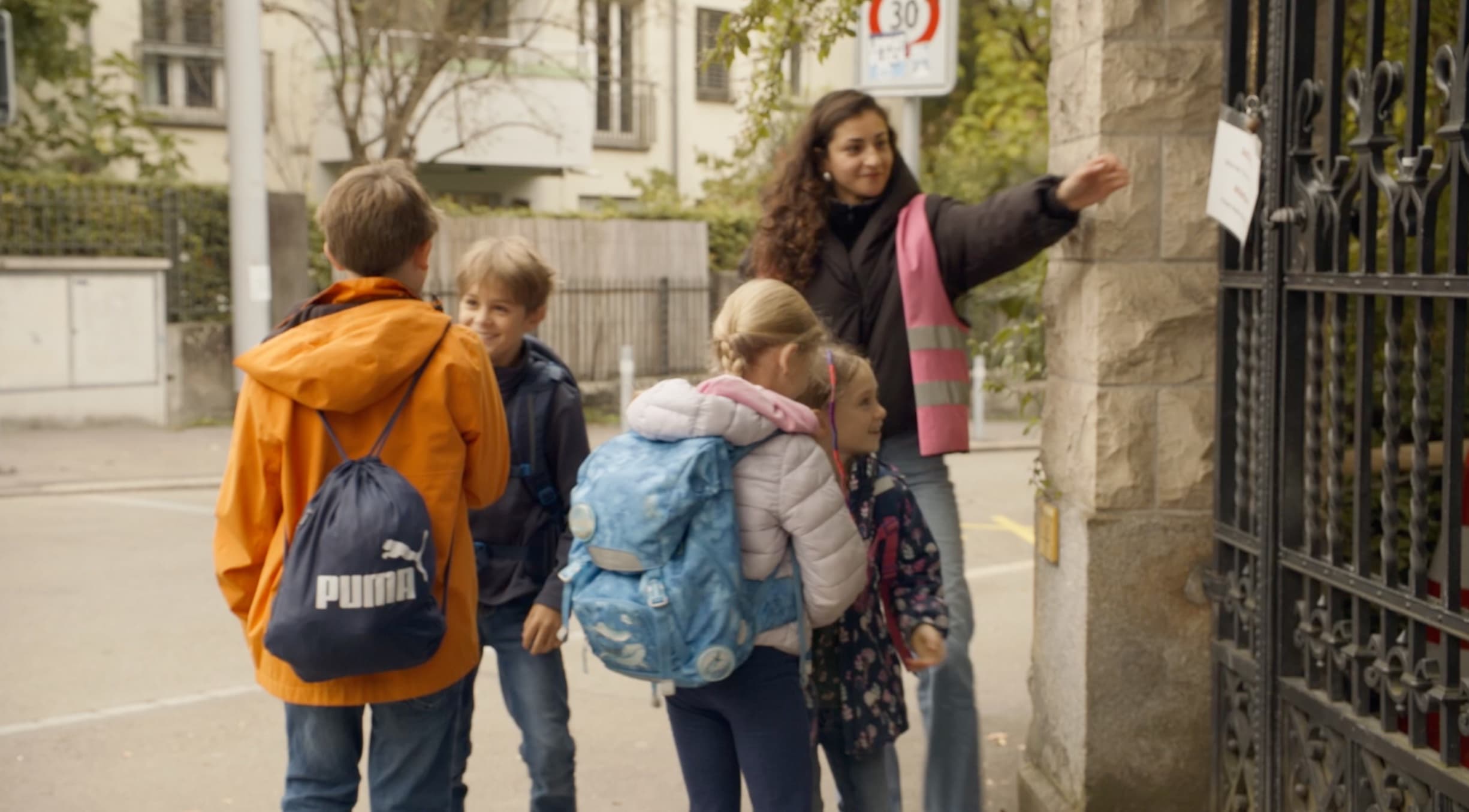
What a school day with us looks like
What does a typical day look like? When does my child learn? When are the breaks? How does lunch work? What does the afternoon look like? What happens outside of lessons? We take you through a perfectly ordinary school day with us.
Fixed rhythms give children orientation. A well-built school day needs clear structures and, at the same time, enough room for discovery and depth. Our daily rhythm is tried and tested: long free-work phases for concentration, shared meals for community, movement and stillness in alternation.
Seven parts of the day at a glance
Breakfast — 7 to 8 a.m., for those who wish.
Arrival — 7:50 to 8:15 a.m. (kindergarten until 8:30 a.m.). A calm start into the day.
Free work — Three hours of concentration without interruption.
Lunch break — Time to relax, play or talk together.
Lunch — Fresh from our kitchen; a shared meal.
Afternoon — Kindergarten: free play, sport. School: subject lessons, music, art studio, sport.
After-school care — From the end of lessons until 6 p.m. A varied programme, time to play with friends.
The morning is the most important learning time. After arrival, the children begin with free work — an undisturbed phase of about three hours in which they work independently with the materials and set their own priorities. During this time the teachers give targeted inputs and new impulses: they present new materials, open up topics and accompany each child wherever they need help.
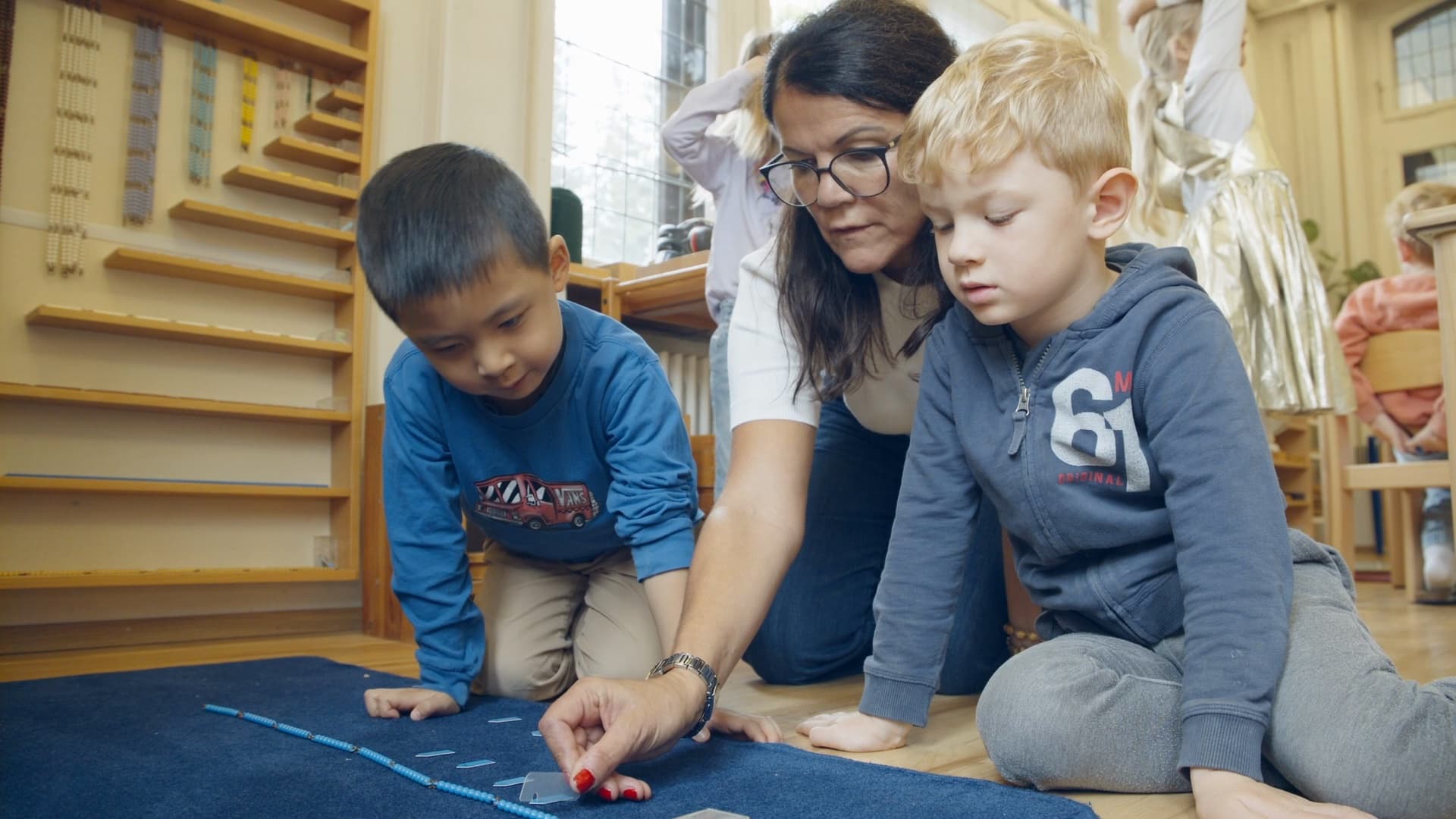
This long, calm phase of concentration is a hallmark of our school. It makes real depth possible — something often lost in the fragmented timetables of other schools. The teachers accompany each child individually and observe their progress attentively.
What makes our day special
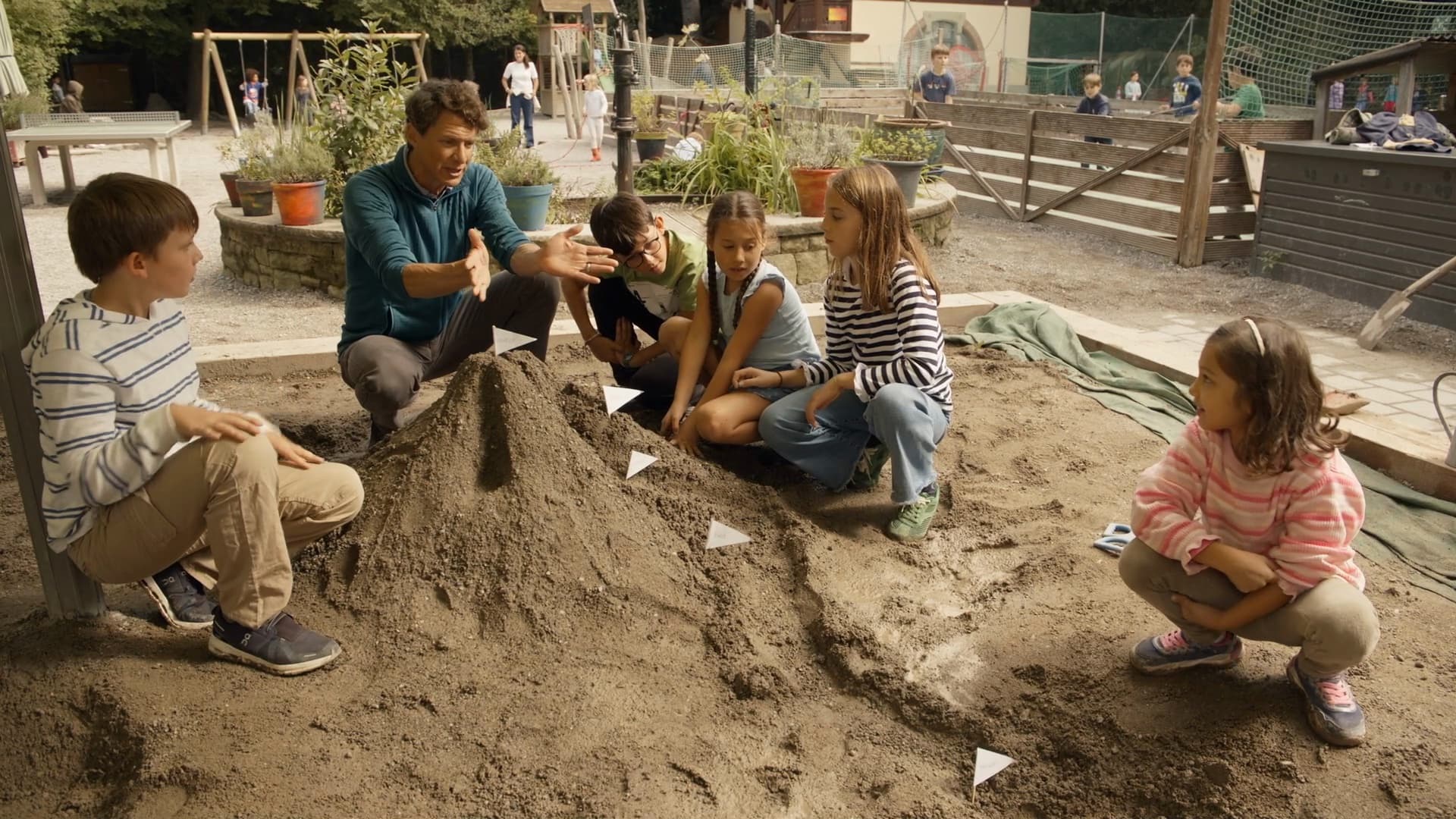
Individual impulses
Teachers present materials specifically to small groups or single children — input at the right time, at the right depth.
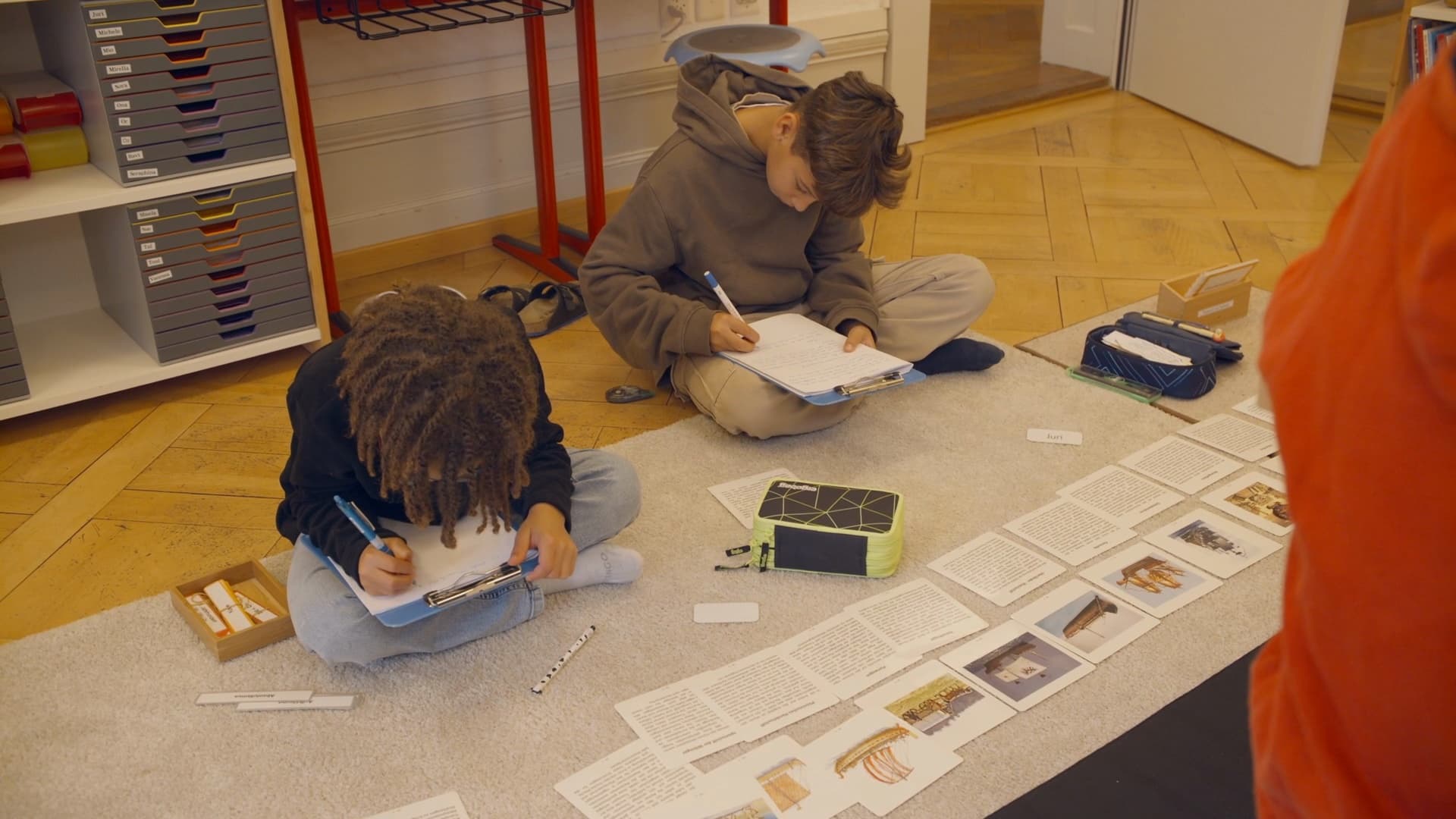
Self-chosen focus
Children decide what they work on — and so develop real responsibility for their own learning.
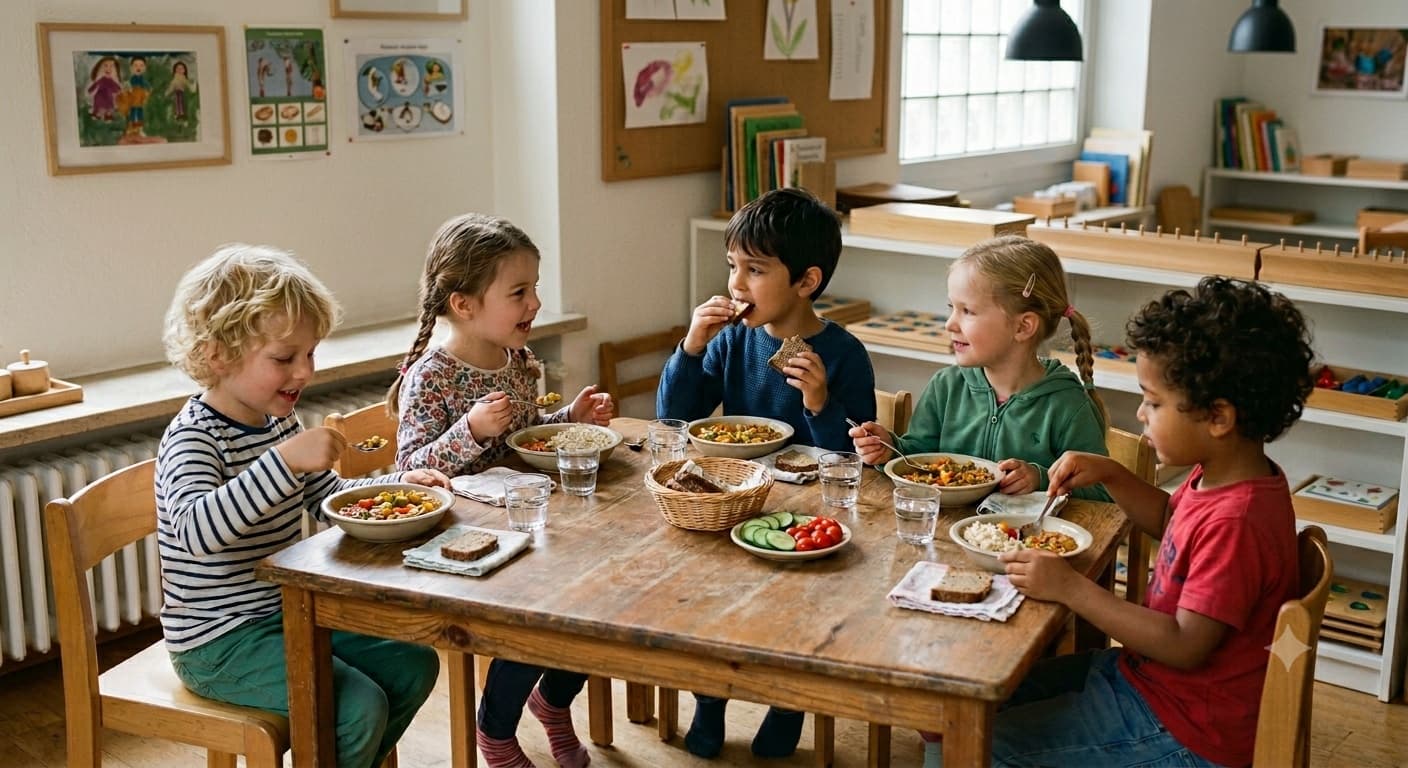
Our own school kitchen
Fresh, balanced meals — cooked on site every day. Children help with setting tables, serving and tidying up.
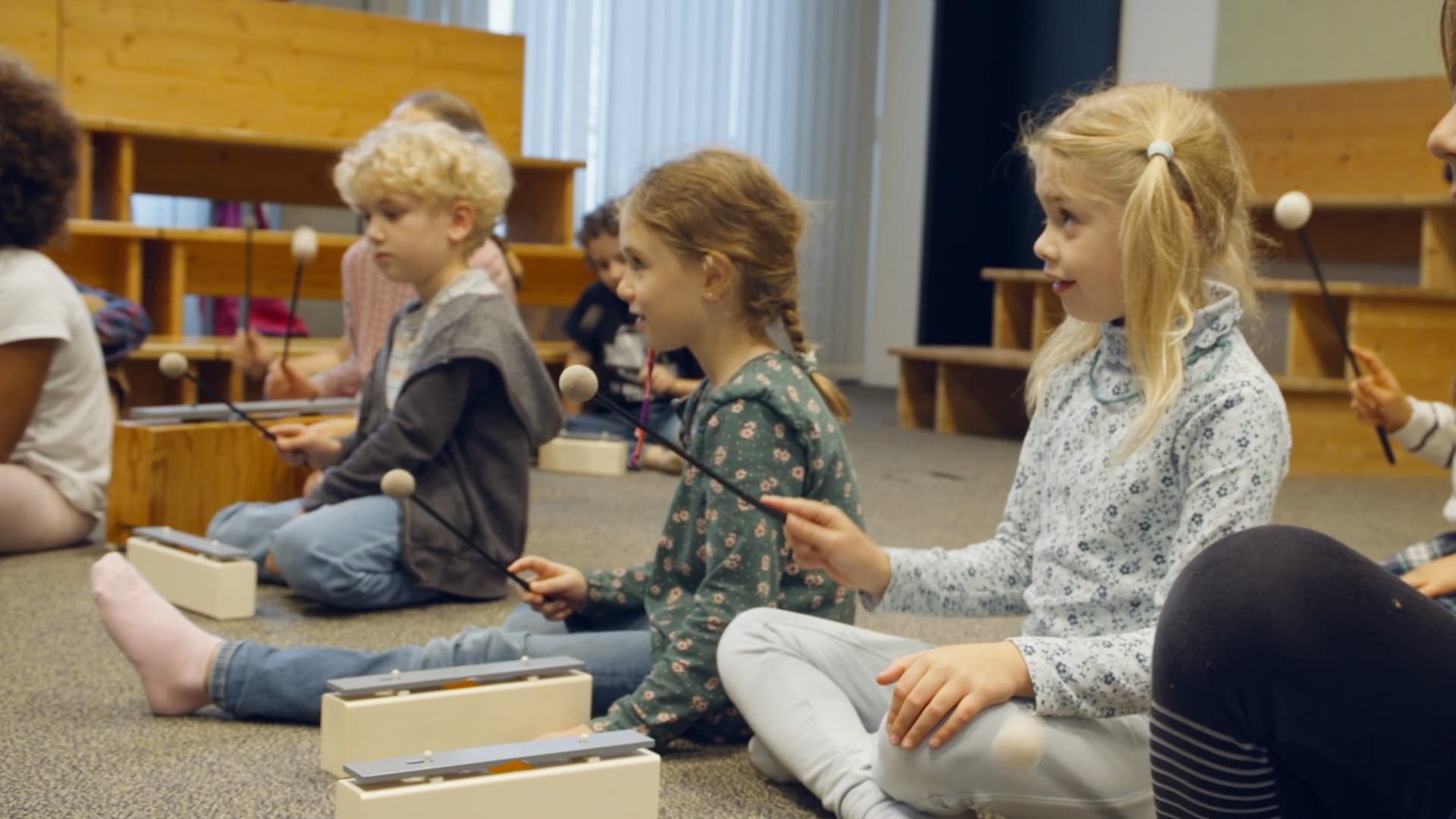
Arts and sport
Sport, music, painting atelier, handicraft, woodwork — led by specialists, embedded in the daily rhythm.
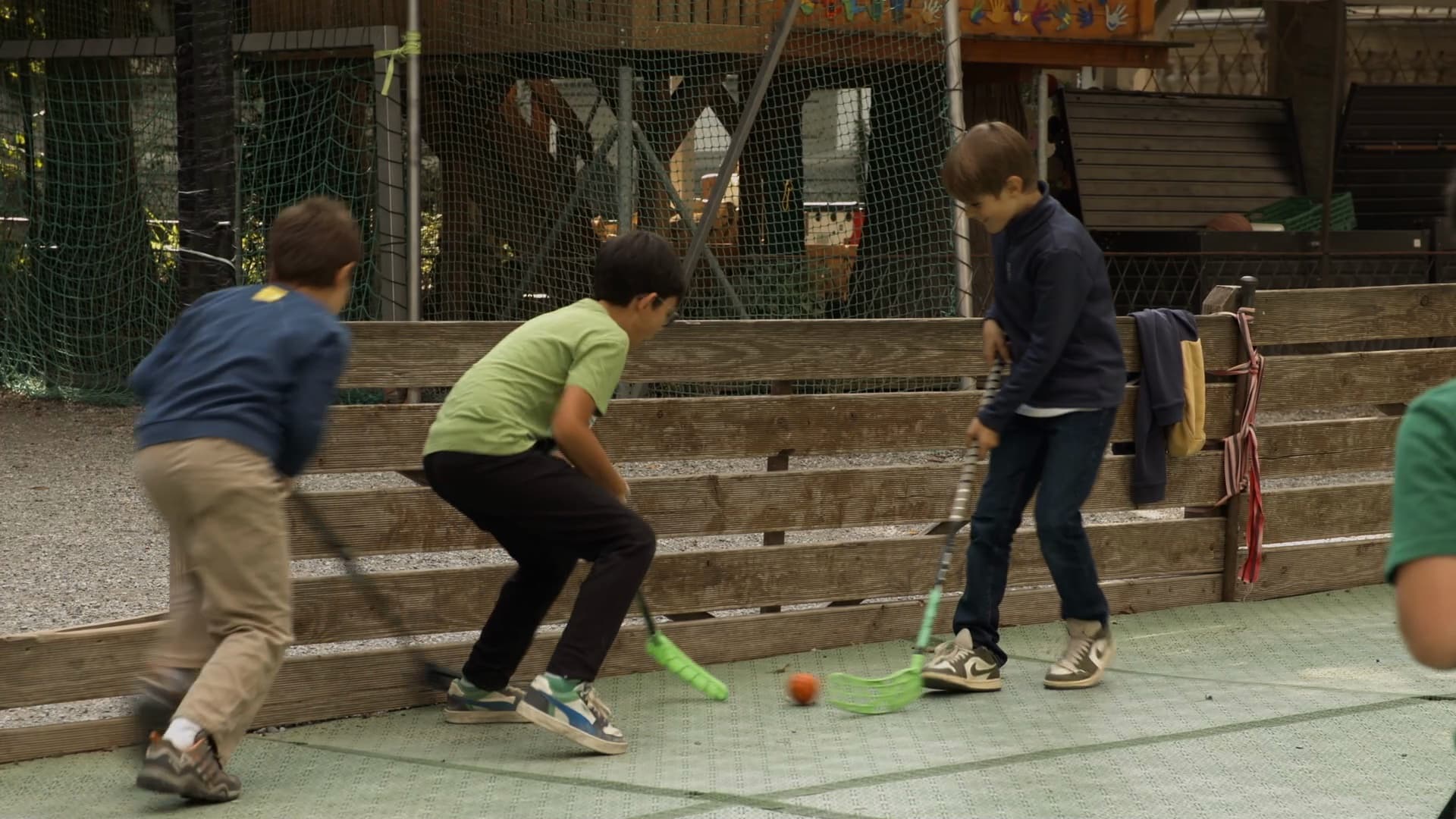
Movement and pausing
Several hours outdoors — our own school grounds invite play, exploration and quiet retreat.
This structure sounds simple — and that is intentional. Clear rhythms give children security. They are the firm framework that is familiar to them and within which they can develop independently. They don’t have to keep adjusting to new situations; instead, they have wide-open spaces within fixed times to shape their day themselves. Children need this order in order to grow step by step into self-organisation.