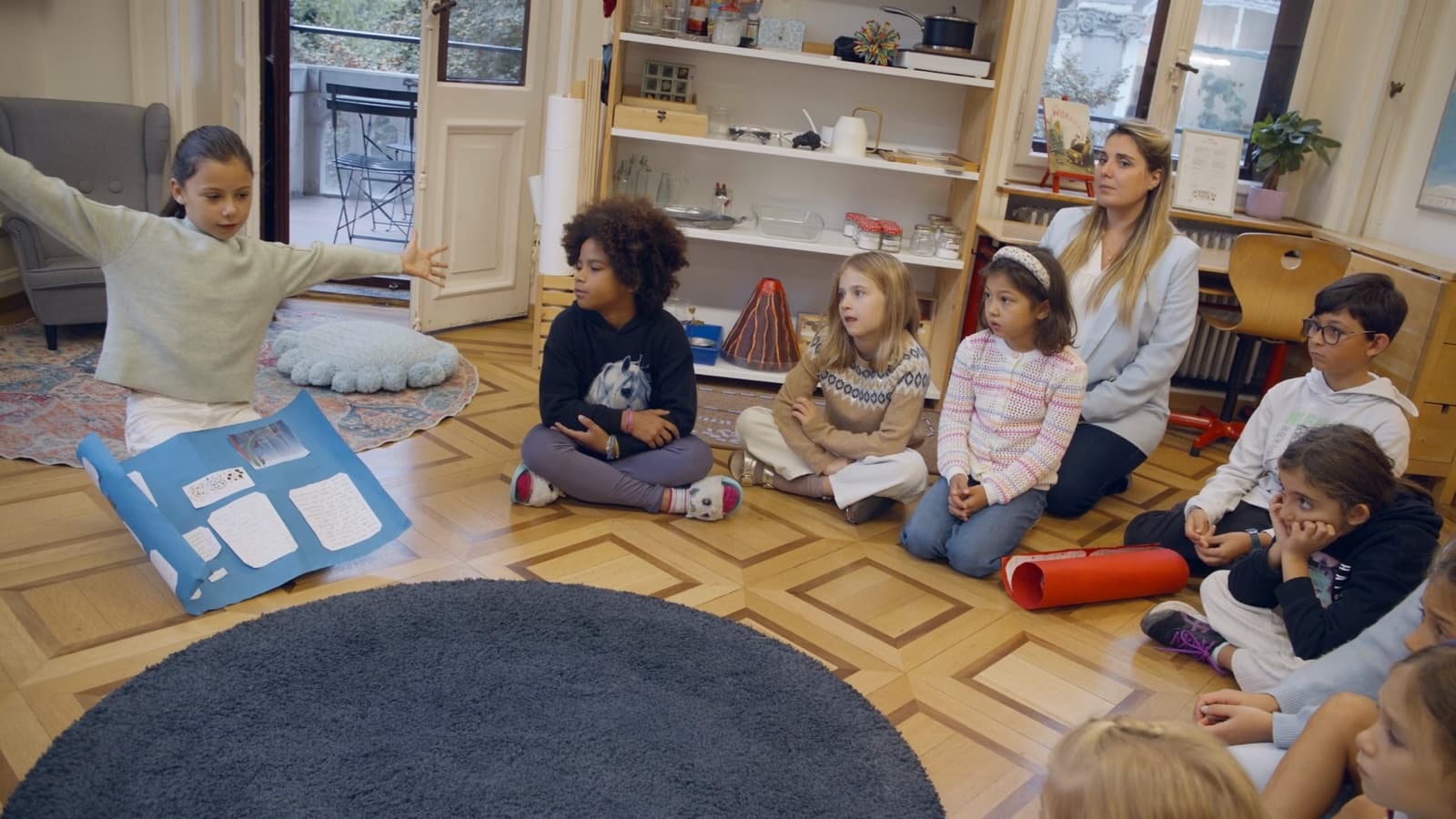
Lived cultural diversity
The world is getting smaller — and your child should feel at home in it: linguistically, culturally and as a person. With English, a curriculum that reflects the cultural diversity of our planet, and lived openness, we widen their horizon a little more every day.
Bilingualism has long been firmly established in our classrooms. What makes it special: from kindergarten onward, English is — alongside German — an everyday and main language. But internationalism means more to us than just English. It is an attitude: curiosity about other cultures, respect for differences, the joy of being at home in several languages.
Four international pillars
Bilingualism: German and English
This is how we live practical bilingualism: in the classroom, a German-speaking and an English-speaking teacher teach together, with each consistently staying in their own language. New topics are introduced flexibly in German or English, depending on the teacher. The same applies to everyday communication. The principle is immersion — through the daily “language bath”, children grow into the language that is still unfamiliar to them.
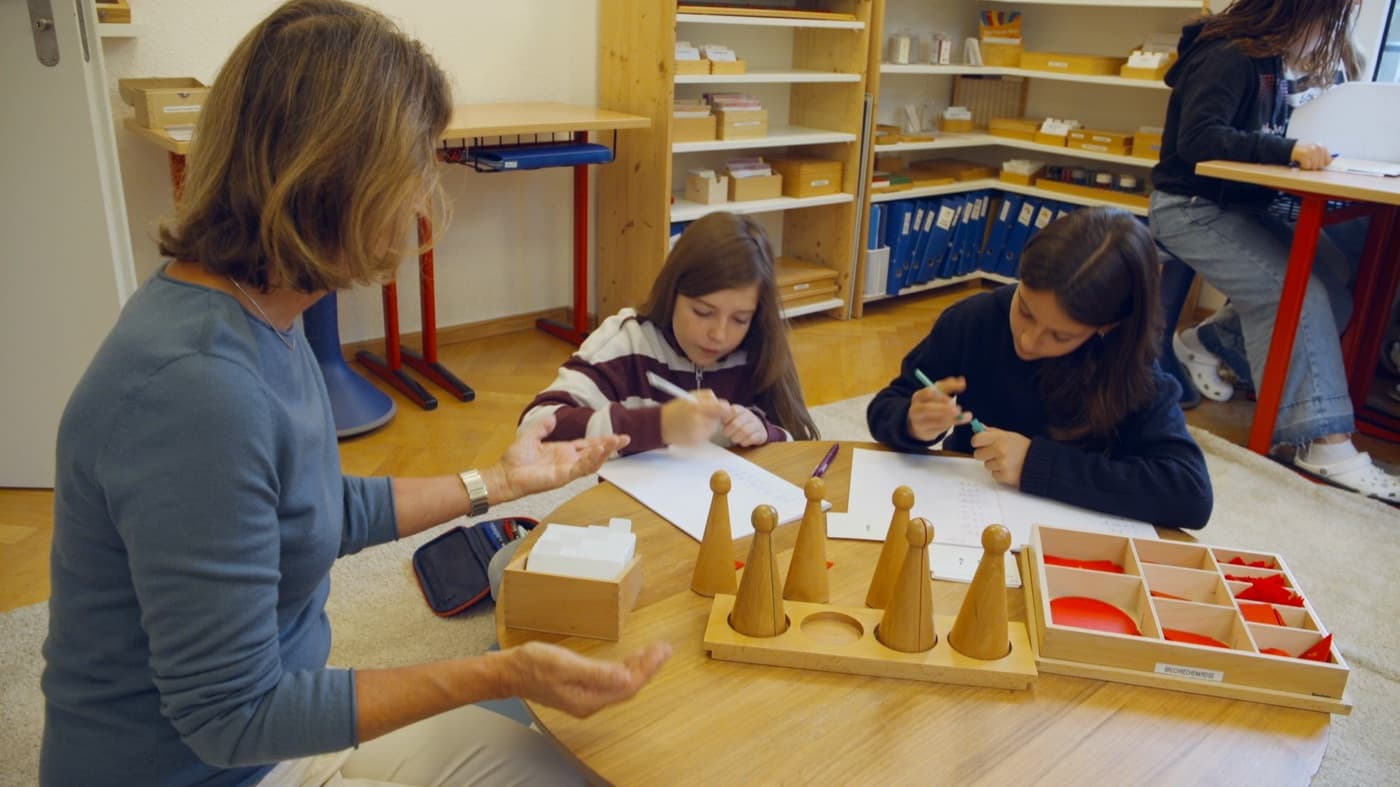
In addition, targeted extra sessions reinforce English grammar and idiom. Since the children come from families with different language backgrounds, English is often the connecting element — in the classroom or on the playground. In this way, alongside German, English becomes an everyday language quite naturally, not a school subject. Many of our students thus reach an oral level by the end of year 6 that is otherwise expected only in secondary school.
What international education means to us
Internationalism is not just a buzzword for us. We start from the idea of a shared responsibility of all people for the future of our planet and convey: only through shared exchange do we move forward. This is the guiding principle of our curriculum and also shapes everyday school life. We want to build bridges instead of walls, awakening curiosity about the diversity of our planet, its people and cultures. The foreign thus becomes familiar, interest becomes respect.
Internationalism creates self-confidence — the certainty of being able to navigate a global world. We give your child this certainty not through theory, but through daily, lived experience.